Sciatica Relief: What Helps, What Doesn’t, and When to See a Chiropractor
Sciatica can feel like a deep, electric shock that shoots through your low back, hip, or leg. For some people it comes and goes; for others it’s a constant, burning pain that interrupts sleep, work, and exercise. Here in the Honeoye Falls, Mendon, Pittsford, and Victor areas, sciatica is one of the most common conditions we see in the clinic—and thankfully, one of the most treatable.
Before you reach for painkillers or assume you need surgery, it’s important to understand what sciatica actually is, what makes it worse, and which treatments truly work.
What Exactly Is Sciatica?
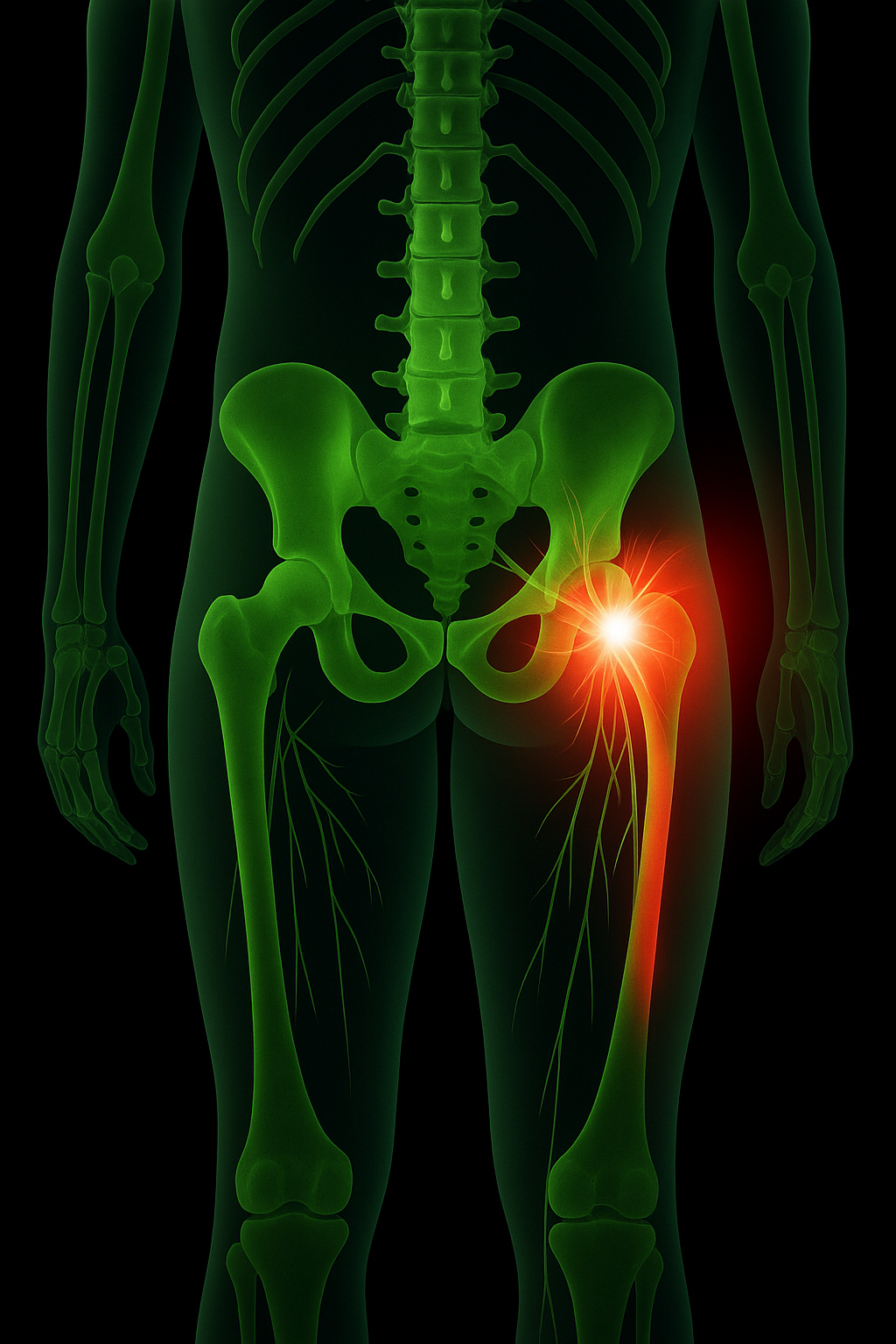
Sciatica isn’t a diagnosis—it’s a symptom caused by irritation of the sciatic nerve. This can happen when:
a spinal disc becomes inflamed
the lower back joints aren’t moving correctly
tight muscles irritate the nerve
swelling compresses the nerve pathway
posture or sitting mechanics increase pressure
The result? Pain, burning, numbness, tingling, or weakness down the leg.
What Actually Helps Sciatica
Based on evidence, clinical experience, and thousands of patient outcomes, these are the methods that consistently relieve sciatica.
1. Chiropractic Adjustments
Adjustments reduce pressure on the nerve by restoring motion to the joints of the spine and pelvis. Most patients experience relief within a few visits.
2. Targeted Soft-Tissue Work
Tight glute, hip, and piriformis muscles can irritate the sciatic nerve. Soft-tissue release helps the muscles relax and reduces pressure.
3. Anti-Inflammatory Nutritional Support
Because inflammation drives most sciatic irritation, supplements play a major role in recovery.
Highly effective options include:
Ligaplex® II – supports connective tissue healing
Boswellia Complex – reduces inflammatory enzymes
Turmeric Forte – clinically shown to decrease swelling
Olprima™ EPA/DHA – omega-3s that calm irritated nerves
These can be ordered through our Standard Process online store with nationwide shipping.
4. Movement & Mobility
Gentle walking, hip stretching, and core activation help relieve pressure and restore normal biomechanics.
What Does Not Help Sciatica
Many common “treatments” people try at home actually make the flare-up worse.
Long periods of sitting
This increases compression on the nerve.
Stretching the hamstrings too aggressively
This can pull on the nerve root and increase irritation.
Hot packs during the first 48 hours
Heat can increase swelling early on.
“Pushing through it” during workouts
Inflamed nerves hate force and repetitive loading.
When to See a Chiropractor
You should schedule an appointment if:
your pain lasts more than 3–5 days
you're getting numbness or tingling
pain shoots down the leg when sitting
you feel weakness or instability
symptoms keep returning
the pain interferes with daily activities or sleep
At Rochester Sports Chiropractic, we help patients from Honeoye Falls, Mendon, Pittsford, Victor, and Rochester get fast, safe, drug-free relief.
Natural Relief + Chiropractic = The Perfect Combination
Sciatica responds best when you treat both the mechanical issue (joint pressure, muscular tightness) and the biochemical issue (inflammation).
By combining:
✔ Chiropractic adjustments
✔ Soft-tissue therapy
✔ Mobility exercises
✔ Whole-food nutritional support
…most people experience significant improvement and long-term relief.
If sciatica is slowing you down, we’re here to help you get back to moving—and living—comfortably.